
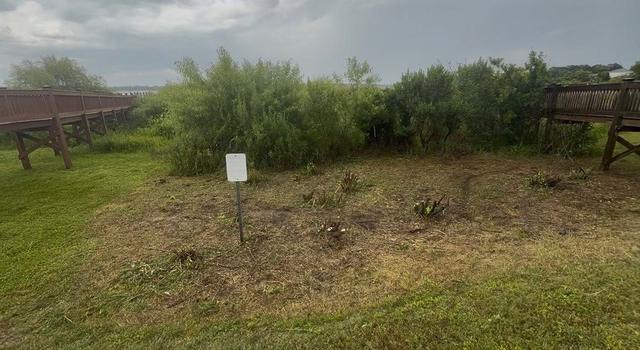
What is brush clearing?
Brush clearing is cutting out overgrown vegetation: thick brush, weeds, vines, saplings, and volunteer growth. It gets a fence line, lot edge, lakefront, or neglected yard back to something you can walk through and see across. We cut it, gather it, and haul it away.
Overgrowth is more than an eyesore. It hides where your property actually ends, gives snakes and rodents somewhere to live, blocks a view you paid for, and piles up dry fuel next to the house. Most of our brush calls come from people who bought a neglected place, came back after a season away, or let one corner go a year too long.
Common reasons people call
- Brush and vines have swallowed a fence line or the edge of the lot
- Saplings and palmettos are moving into the yard
- You have lost your view of a lake, pond, or canal
- You cannot see or walk your property line any more
- A house you just bought, inherited, or rent out has been left too long
How the job runs
- Walk it with youWe look at access, what is growing, and exactly where you want the finished line.
- Cut it backBrush, vines, saplings, and weeds come out to the line we agreed on.
- Haul it offThe material is gathered and taken away. No piles left for you to deal with.
- Tidy upWe rake the area so it is ready to mow, mulch, or leave alone.
What to know before you book
- Cutting brush does not kill the roots. Most of it will push back up, and how fast depends on what it is and the time of year. If you want it to stay down you will need it cut again, or treated, or mowed regularly.
- Big trees are not our work. We handle saplings and small trees. For anything tall, near power lines, or leaning on a structure, hire a tree service with a certified arborist.
- If a lakefront or wetland edge is regulated in your county or by your water management district, that is on the property owner to check before we cut. Tell us what you are allowed to remove and we will work to it.
- Very heavy or very large lots may need equipment we bring in, which affects the price. We will tell you at the estimate, not halfway through.